All posts
Read time 5 min

Alibaba and the Claude ban rumor: what is verified, and what developers should actually do

A Chinese report says Alibaba has told employees to uninstall Claude and Claude Code. The internal ban itself is not publicly confirmed, but Anthropic's China restrictions, distillation accusations, Claude Code marker controversy, and the U.S. 1260H list all point to the same lesson: AI coding tools are now supply-chain risk, not just productivity software.

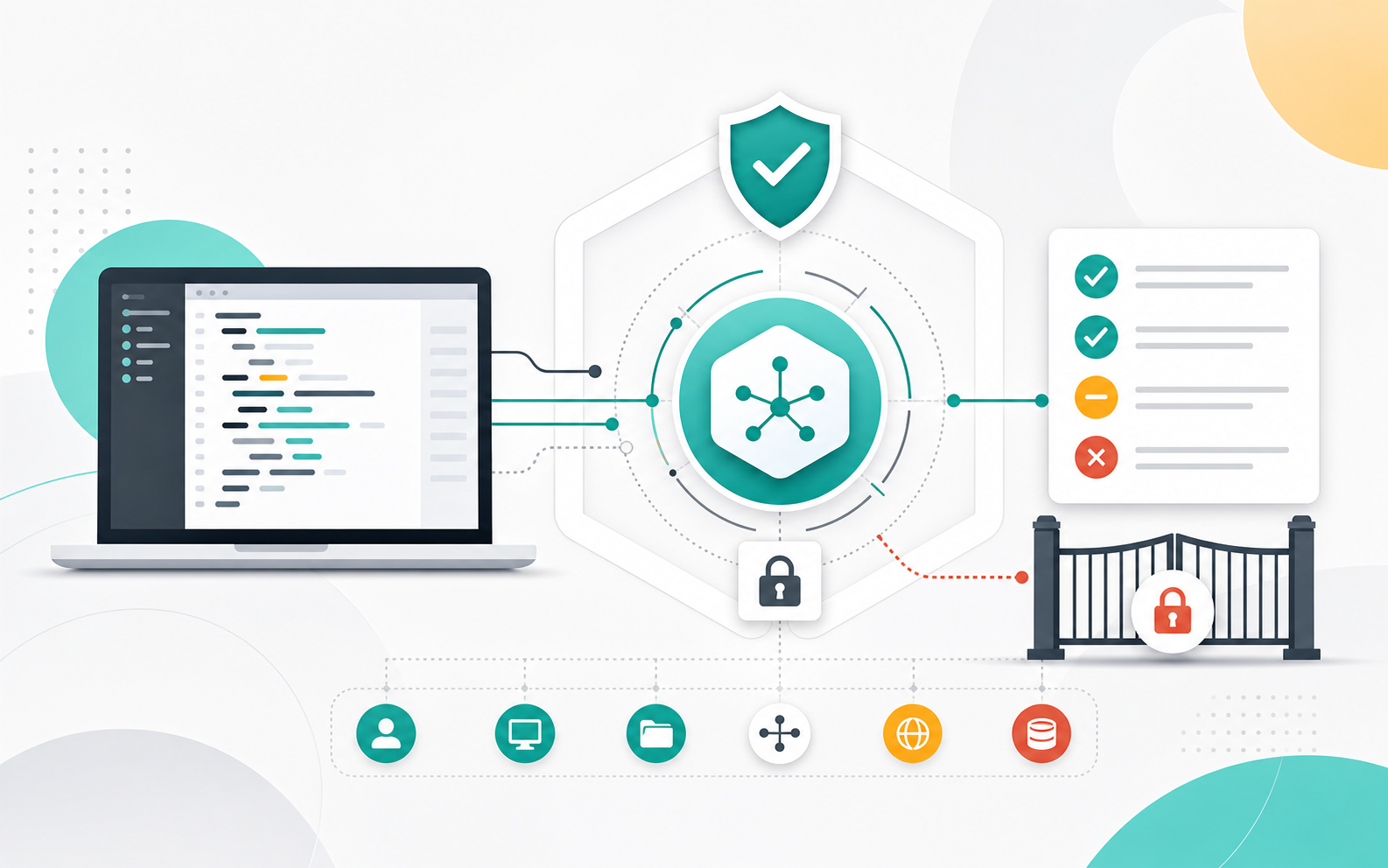
AI coding assistant behind security glass

On July 3, a Chinese tech article reported that Alibaba had internally banned Claude, requiring employees to uninstall Anthropic products including Claude Code and related agent tools, with the policy allegedly taking effect on July 10.

That story travels fast because it sits on top of several real tensions: Anthropic's restrictions on Chinese access to Claude, allegations that Alibaba used Claude for large-scale model distillation, the hidden-marker controversy in Claude Code, and Alibaba's lawsuit over the U.S. Department of Defense's 1260H list. The important part is to separate what is publicly verifiable from what remains an internal-communications claim.

As of July 3, 2026, I have not found an official Alibaba or Anthropic announcement confirming a company-wide Alibaba uninstall order. The safer reading is not "the ban is proven," but "large companies now have strong reasons to review AI coding assistants as security, procurement, and compliance dependencies."

Three layers of evidence

The first layer is public record. On June 8, the U.S. Department of Defense published its 1260H list and included Alibaba Group Holding Limited, with the department's stated rationale. Alibaba later sued in U.S. court to remove the "Chinese military company" label; public reporting says Alibaba argues the designation has no factual or legal basis.

The second layer is reporting based on a non-public letter. The Wall Street Journal reported that Anthropic accused Alibaba and its AI team of carrying out a large Claude distillation campaign involving almost 25,000 accounts and nearly 29 million interactions. Other outlets repeated the same core numbers. But the letter itself is not a downloadable public technical report, and Alibaba has not publicly answered every technical detail.

The third layer is community reverse engineering and product controversy. Claude Code was found to contain a hidden marking mechanism: under certain proxy or environment conditions, it encoded environmental signals through small character differences in the system prompt. The Register, The Decoder, and Semafor reported that Anthropic planned to remove the mechanism; a GitHub Gist technical analysis also cautioned that this looks like fingerprinting, not a separate remote-control or data-exfiltration channel.

Why a company would tighten Claude Code access

From an enterprise security perspective, Claude Code is more sensitive than a normal chatbot. It can read repositories, generate patches, invoke terminals, touch environment context, inspect internal documentation, and send selected context to an external model service. Even if the model is not malicious, a company still has to answer basic questions:

  1. Which code and documents leave the company boundary?
  2. Does the vendor permit this region, legal entity, and payment setup?
  3. Does the client contain undisclosed environment detection, telemetry, or hidden markers?
  4. Are employees using personal accounts, proxies, reimbursements, or shared accounts to bypass procurement?
  5. If access is suspended, does a critical engineering workflow stop?

So if Alibaba has indeed restricted Claude internally, the reason is unlikely to be one simple "backdoor" label. The more realistic bundle is vendor terms, geopolitical risk, account-enforcement risk, code-exposure risk, client transparency, and the company's incentive to move work onto approved internal tools.

Hidden markers are not the same as a magic backdoor

The fastest way to distort this story is to call the Claude Code marker a full "trojan" or "backdoor" without evidence. Public reverse-engineering writeups suggest the mechanism mainly encoded whether certain proxy, timezone, or keyword checks were hit, then carried that signal through subtle prompt-character changes. That is not the same as a client that can execute arbitrary remote commands.

But enterprises still have reason to care. The issue is not only technical capability; it is trust boundary. Developers could not easily see, audit, or disable the marking behavior from the normal interface. For a tool that can touch source code and terminals, undisclosed detection logic is enough to trigger a security review.

What this means for individual developers

If you only use Claude casually, the biggest practical risk may be account availability and subscription loss. Anthropic's Help Center says accounts may be suspended or terminated for policy, terms, or unsupported-location reasons, and affected users must log in with the disabled account to submit an appeal.

If you use Claude Code on real projects, the risk is more concrete:

RiskPractical impactBetter habit
Account suspensionWorkflow, history, and collaboration breakKeep project context in your own repo, not only inside Claude
Client transparency disputeSecurity team may require uninstall or isolationTrack versions, network path, and allowed directories
Third-party API proxyVendor and data route become hard to auditPrefer approved direct access or enterprise gateways
Cross-region payment or reimbursementAccount or organization may violate termsDo not replace procurement with personal workarounds
Vendor policy shiftTool becomes unavailable overnightKeep Codex, local models, or another fallback path ready

What teams should do

The lesson is not "replace one tool with another." The useful move is to build a minimum acceptance policy for AI coding tools.

First, maintain an allowlist. Decide which models, clients, proxies, and plugins can touch which repositories. A personal subscription can be fine for learning, but it should not automatically be allowed inside production code.

Second, classify repositories. Open-source, low-risk internal, customer delivery, secret-bearing, and trade-secret repositories should have different AI usage boundaries.

Third, use a controlled egress path. Enterprises should prefer auditable model gateways instead of letting every engineer choose their own proxy and payment path.

Fourth, keep workflows portable. Prompts, task breakdowns, generated patches, review notes, and runbooks should be able to move from one AI client to another.

Fifth, read client release notes. For tools that can read files, run commands, connect MCP servers, or control browsers, model quality is only one part of the risk. Local agents, telemetry, permissions, and data routes matter too.

My take

Whether Alibaba has formally banned Claude internally still needs stronger public confirmation. But even if this specific rumor changes, the larger trend will not: AI coding assistants are moving from "which one is smarter" to "which one is auditable, purchasable, revocable, and replaceable."

Individual developers do not need to panic, but they should own their durable project assets. Enterprises should not treat external agents like ordinary SaaS widgets. An AI client that can read repositories and run terminal workflows is already part of the engineering supply chain.

Sources

Related